

How does a seemingly small technology advance lead to giant, inspiring leap forward?
In 1841 a broke, journeyman American artist was having a hard time making it go as a portraitist in London. After almost 10 years, John Goffe Rand was still struggling to break through. But, while he may not have been an artistic genius, he was curious and inventive. Probably tired of spending all his money on painting supplies that ran out and dried up, he took a recent innovation in materials production - rolled tin and lead - and he came up with a solution to a problem every painter had.
Those little tubes that can be squeezed like toothpaste, pushing the oil paint onto the palette? That’s what he invented and patented.
Those tubes of paint were expensive, but they were a breakthrough. Before, all paint was mixed in the studio for each session and had to be used right there, right then. There was craft in the mixing of paint, but it was hands-on and time consuming. Paint in a tube was an immediate efficiency and time saver. In its own way, it was a sustaining innovation.
But, more importantly, the made it possible to take the paint out of the studio and out into the world. Soon, artists were more focused on painting the greatness they saw out in the world than the fat commissions they got for portraits. In some ways, paint in a tube unlocked a disruptive innovation: Studios everywhere and for anyone.
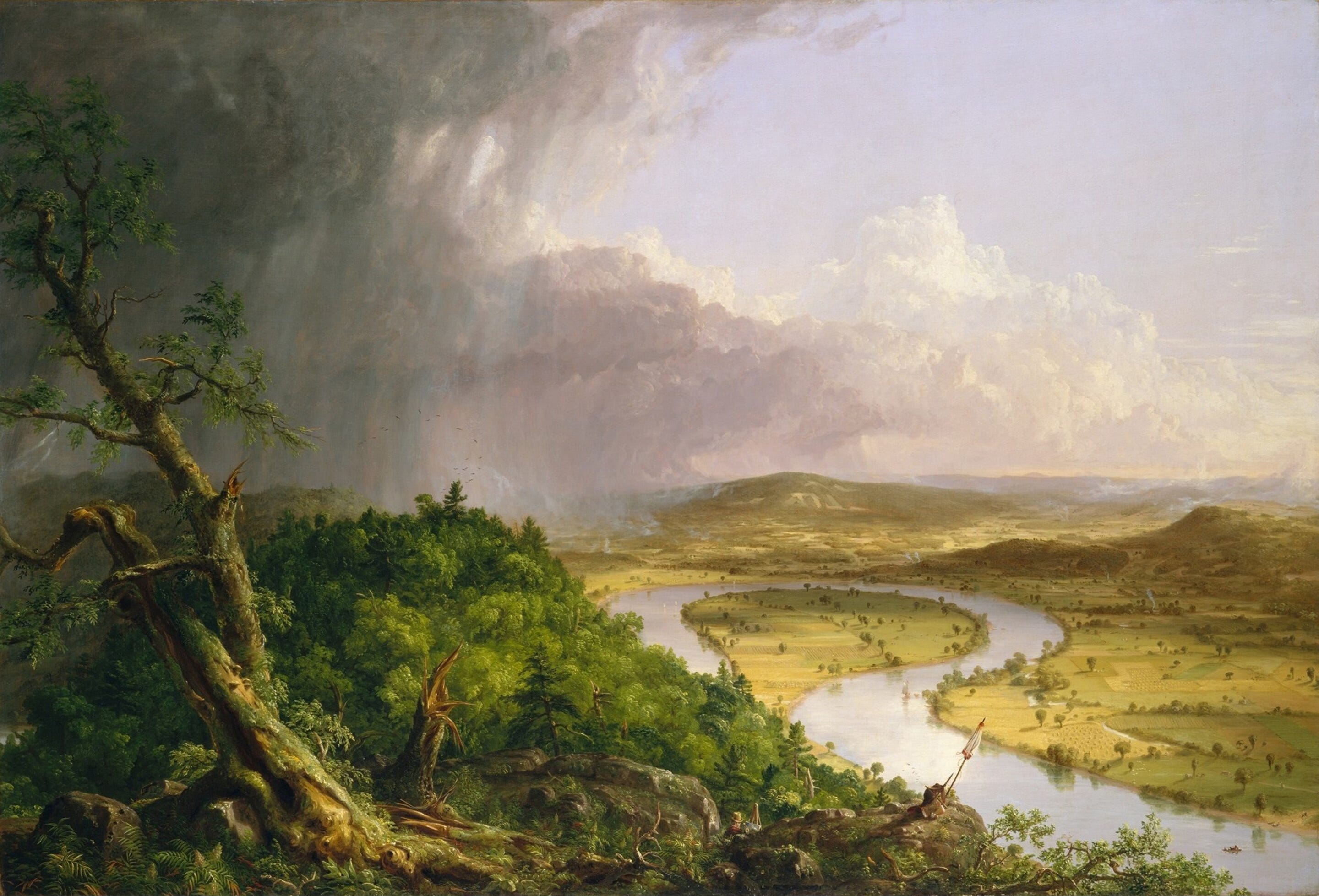
You wouldn’t have the Hudson River School without paint in a tube. Those artists stood on the top of hills and tried to capture the power and genius of nature. They pointed us at the sublime right in front of us (instead of more paintings of stuffy white business dudes). Ultimately, they were showing us a new way to see the natural world at a time when the Industrial Revolution was in full swing and mechanization and automation were driving immense changes in society and culture.
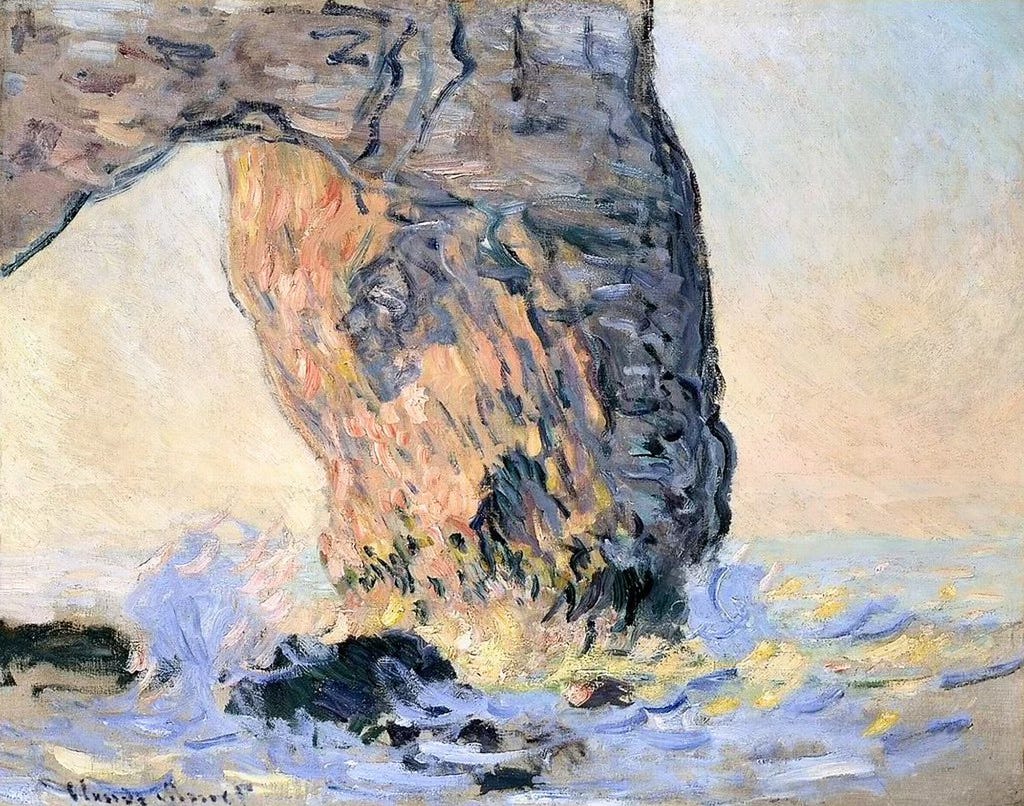
And, you can draw a somewhat direct connection to Impressionism, more modern way of seeing and understanding the world we live in:
The eminently portable paint tube was slow to be accepted by many French artists (it added considerably to the price of paint), but when it caught on it was exactly what the Impressionists needed to abet their escape from the confines of the studio, to take their inspiration directly from the world around them and commit it to canvas, particularly the effect of natural light. For the first time in history, it was practical to produce a finished oil painting on-site, whether in a garden, a café or in the countryside
Who knows what AI innovation is coming next. It’s changing so fast, with something significant coming everyday. It’s impossible to keep up, but it’s energizing to be on the ground as a new era is emerging in real time, with lots of eager, excited folks talking about innovation, disruption, transformation, and “game changers”, etc.
Despite all the news and hype, for most of us on the front line the revolution is still a promise or propaganda and not yet a practice.
We’re in the skeuomorphic phase of AI right now, where we’re making “better” versions of what we’ve already got. All the new stuff is a close-but-slightly-better comparison to the old stuff.
Our language reflects it, too, as we grasp at ways to communicate how the new compares to the old. We’ve got things called “copilots” and “notebooks” and “agents” so users can easily grasp what they do (versus what we can make with them). We’ve seen it in other, previous revolutions:
Trains were “Iron” horses
Cars were horseless carriages
Cell phones were called wireless phones
Online videos were “streaming TV”
We’re making sense of the “new” by referring to the “old” stuff.
We all know what’s ahead: The large leaps forward. When the artists realized they could take their paint anywhere, that they could work on a much broader subject, their ambitions rose and the work advanced dramatically.
When company builders and product teams leave the proverbial studio and explore what’s truly possible with the help of AI, we’ll see truly disruptive innovation.
But, with so much novelty around us, will we recognize the breakthroughs when they are right in front of our face?
This is a great time for us business folk to go back to the basics and remind themselves the difference between:
Novel features
Sustaining innovation
Disruptive innovation
Business model innovation
Meanwhile, it’s so much fun to watch it all unfold, even if it means putting up with some hucksters and hype-bros who are promoting “get rich” BS, lazy hacks.
Notes:
Written while listening to the impeccable chamber pop of Sam Philips, specifically “A Boot and A Shoe”)
Check out Reed Enger’s amazing work on Obelisk: Art History Project. It’s a helluva side project, a reminder of how great the web is / can be/ used to be.