

A bit of a roundup and no mention of some dumb conference in France for Ad (and adtech) nerds.
I promise not to turn this into another AI newsletter, but it’s been a primary focus for the last month while I got ready for a talk and, frankly, its been hard to avoid. It will be a major driver on so much work and it will happen faster than we probably imagine. Kind of like what Hemingway’s character said about going broke: “Gradually, then suddenly”.
Just how fast are things about to change? I’m reading an astonishing (and controversial) ebook called “Situational Awareness” from Leopold Aschenbrenner, a former OpenAI employee. This very technical book is for long term thinkers and policy nerds; it’s not about Marketing at all, but if your job involves - in any way - helping your org understand how AI will impact everyone, this is worth the hard slog. He was working on the alignment problem before the whole team was canned. His bracing essays make the case that even the most optimistic assumptions about the arrival of Artificial General Intelligence are too far out into the future, the Artificial Super Intelligence (ASI) will be here by the early 2030s, that there will be a super-clusters of compute that cost a trillion dollars, and that the speed of the arrival of ASI should make it a US/Government priority. Oh, and ASI may be the cause of a global land war. Good times! Maybe I won’t write up a book report.
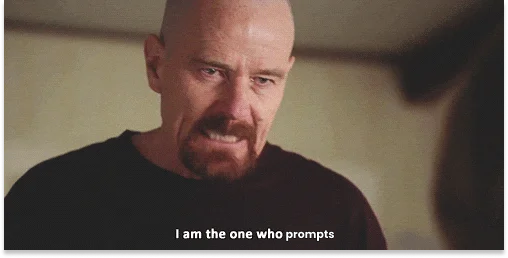
AI Is Oil, Not God - Where Aschenbrenner’s essays imply a certain inevitability to AI super intelligence, and that the likely outcome is a weaponized tech that lords over all of us, leave it to Packy McCormick to provide the optimistic alt-take. And, he’s a great writer. So, I was happy to see this essay in my inbox this week: The Goldilocks Zone. His argument is that AI is more like a commodity (e.g. oil) than a super tech (i.e. “god”) and the commodity will create all sort of progress as industry puts it to use. I love the analogy (despite the obvious negative impact like climate change, congestion, industrialization, monopoly and deforestation ); already bought the history book. As well, he makes a case for a type of AI that actually works well alongside us, as a collaborator, like a well adjusted super smart PHD vs the terminator. He argues that we can still find a future where the super intelligence DOES NOT run amok. I love the reminder he gives: We’re the ones doing the prompting, we’re the ones providing guardrails, we’re the ones setting objectives.
The Schlep - I heard a new-to-me term this week: The Schlep. It’s the hard, manual labor required to improve the results from the LLM’s. Here’s an extended passage that gives you a sense.
But even if no one trained a larger-scale model than GPT-4, and its basic architecture and training process never got any more efficient, there would still probably be major economic change from language models over the next decade. This is because we can do a lot of schlep to better leverage the language models we already have and integrate them into our workflows.
By schlep, we mean things like prompting language models to give higher-quality answers or answers more appropriate to a certain use case, addressing annoying foibles like hallucination with in-built fact-checking and verification steps, collecting specialized datasets tailored to specific tasks and fine-tuning language models on these datasets, providing language models with tools and plug-ins such as web search and code interpreters, and doing a lot of good old fashioned software engineering to package all this into sleek usable products like ChatGPT.
Evidently, the term goes back to PaulG, like so much else. I love the inventiveness of language, and this is a good example of using jargon as an encapsulation of a deep set of actions.
Safe Superintelligence - And, just to put a bow on the week, one of the founders of OpenAI has left to create a firm focused on “Safe” Superintelligence. No one really knows exactly what that means, or how to do it, or if it’s even possible (e.g. how can put a “kill switch” into a LLM that is also agentic and automated), but if anyone can figure it out, it will be this team. Meanwhile, there’s still no action apparently from the Federal Government, so we’ll have to see how Eric Weiner’s CA legislation moves forward (or not).
Next week, back to brand building and marketing stuff.
A fitting song as we head into the weekend BBQ plans (and RIP Gappa):