


Mike Cessario wanted a disruptive brand and he got it. Liquid Death is one of those brands that marketers either love or hate. And the work the brand puts out - the ads, the contests, the content, the PR efforts - definitely gets people talking and, clearly, buying.
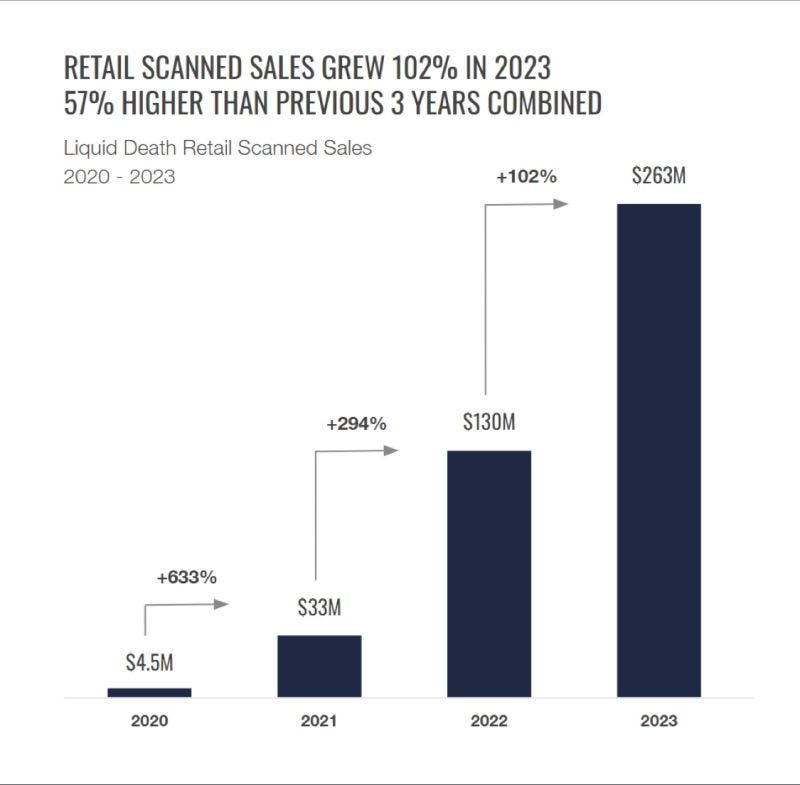
But, whether you love it or hate it, Liquid Death is showing up in a lot of brand strategy discussions these days.
The “awareness” stuff they do - the videos, the promotional gimmicks, the visuals - has been, to me anyway, deeply annoying. Their brief is showing. It's a “try hard” brand: aggressively working to be “edgy”, “non-conformist”, and “disruptive”. The Gen X in me sees a sellout, a poseur.
So, I was surprised one day last month when I was at a convenience store and, for reasons that I won’t go into, I found myself standing in front of a cooler looking at all the non-soda1 options. And, seeing that shelf-set in a deep rural Wisconsin Kwik-Trip it was clear to me immediately why the brand is working:
Product - The packaging is actually good vis a vis the other options. Or, distinct enough. Better than the French stuff in plastic bottles.
Pricing - Not cheap, not expensive, just a tiny bit “upmarket”. Not so expensive you get annoyed.
Placement - Their sales and distribution team is killing it. Sales is always hard, but it helps I suppose to have a) a great product at a b) competitive price and c) a talkable brand.
The takeaway: It’s execution, people. It’s the blocking and tackling with the customers and the distributors. Let the brand guys talk while the sales guys do the actual work. They win at the shelf.
And damnit, they got me: The stuff in the can is actually good enough. Now I’m going to be one of those annoying dads in kakis and a plaid shirt chugging from a Liquid Death, another non-core buyer in the wild.
All the comms (sure, you can call it “content”), the good and the bad, got me to the shelf for my moment of truth. And the brand won.
The Case Studies
Boy, marketers love to write about Liquid Death2. I pulled together a group of links with write ups on Liquid Death and read them so you don’t have to. Here’s my page with a handful of them.
But, what do we really talk about when we talk about Liquid Death? Most of the writing about Liquid Death comes from other marketers. More specifically, the agencies and consultancies that work with brand managers to craft marketing.
As a guy that used to try persuade brand managers to do more ambitious and edgy brand building, I have a strong sense of affiliation with these folks. It’s fun to write about interesting and disruptive creative work, to examine the stuff that made it out of the Keynote decks, past the conference room gatekeepers and into the world. It’s fun to imagine a world where your shop is given a brief like Liquid Deaths, a budget and a marketing leader who says “go for it”. In the end, who doesn’t want to write about influencers getting tased?
These write-ups read, most of the time, like a love letter to bold creative work, the kind of work we wish brands would do more often:
Throw away the notions of peaceful waterfalls and gracefully melting glaciers – Liquid Death’s ads range from tasing participants to tricking audiences into believing children and pregnant people were consuming alcoholic beverages. Because of their hilarious marketing stunts and insane campaigns, Liquid Death created highly sought-after entertainment that pushed them front and center in consumer minds and against water competitors. (link)
Are these marketing firms sharing their Liquid Death case studies with their clients? Sure. Is it a passive aggressive way to start a conversation about pushing the creative work a bit? Yep.
That conversation is needed. Most brands do average or dull work. The bummer is that good brand marketers want to do bold work, too. No marketer goes to work to create bland messaging and products. 50 variations on a boring, feature based message won’t get you to a French beach and endless buckets of Rosé surrounded by thousands of other sweaty and angsty ad nerds.
But agencies typically won’t walk into a room and tell the marketers, “Hey, you’re leading us towards boring creative work, and what you’re approving is probably not going to help business results. Aim higher. You can do something bolder.” They’d get fired in a minute by the marketing team.
So, case studies like these are a (not so subtle) pitch to brand teams, saying, in effect: “Hey look, bold consumer comms can really work; you can do it too! And, if you are good at the rest of your job (getting the pricing right, keeping the margins fat, working with sales to get it one the shelf), the bold consumer stuff can actually be differentiating and prop up a premium positioning. Let’s do it!!!”
The dreaming creatives and the analytical marketers need each other. If these case study writers were really honest with themselves, if they thought deeply about how their clients businesses actually make money, they’d try to tell the whole story: The job of the creative/demand team is to get people to pay attention, to actually “see” the product on the shelf when they get there, and to give it a try. But that doesn’t work if the product isn’t there to buy in the first place.
The reality is, a disruptive approach to brand building (i.e. awareness, equity) can’t drive results if the rest of the pieces aren’t in place: the pricing, the distribution, the packaging, the margin mgmt.
Yeah, But…
A critique on the case studies: Maybe I need to read more, but i’m still looking for the case study that talks about the courage/vision of the Liquid Death marketing team: They committed to “small ball” brand building early, took huge risks with their creative, made a ton of tiny, non-measurable content efforts, had a bunch of “misses”, but kept going, staying committed to the grass-roots, true believer model. They did this for years, with lots of noise in their measurement. Someone kept the money flowing when they couldn’t get a “read” on ad/equity building stuff. This wouldn’t work in a typical CPG company today.
I’m still not in the “love them” camp. I think it’s still sort of a BS brand that tacks a feel-good purpose on top of a killer business model. Will this brand be here in 20 years? They’ll probably get acquired or go public, and then all this stuff gets watered down in the pursuit of margins and market share. The fun stories will stop, the case study writers will get bored, and we’ll move on to some other brand.
In the meantime, I do love the brand as a conversational lever. It’s a great example to put on the table when you talk to your client or your agency about the kind of marketing and brand building you want to do.
It’s soda. Not pop. I’m from Wisconsin. We would drink soda from bubblers if we could.
Yes, i know what I’m doing here, but thanks for checking out the footnotes.
It's weird being at the age where I'm clearly not the target market for a lot of this stuff anymore. This feels like an early page out of maybe Redbull maybe?!?! Clearly something is working for them. I've never been a "pay a premium" for canned or bottled water...see also Evian...so I've completely ignored the brand on the shelf. "The fun stories will stop, the case study writers will get bored, and we’ll move on to some other brand." The inevitable "death" spiral for most home grown brands.