

I’m having some future-focused conversations with my sons who each will be peripherally involved in software and startups when they hit the workforce this summer.
Good news: They’ll be launched and independent! Young professionals on the go, working to be net contributors to society.
Bad news: They are entering a market economy that will be significantly changed, over the next 20 years, by AI driven disruptions.
The Silver Lining: Dynamic economies create opportunity, and I think overall AI will be a net positive for the world. Whole new business models will get created as others get gutted. The future is up and to the right, and someone has to make it happen, so why not them? It’s just going to be ugly at times as we get there.
While I’ve been talking to the sons about the future, I’ve been preparing for a keynote in late June about how to integrate AI (well, really, generative AI) into today’s marketing portfolio. How does a typical marketing manager or director make decisions today about when and how to leverage the bleeding edge tools?
It’s an actual conundrum: There are billions of VC dollars flowing into startups for marketing services, but which of these new companies will even exist in a few years? Are they features masquerading as companies ?
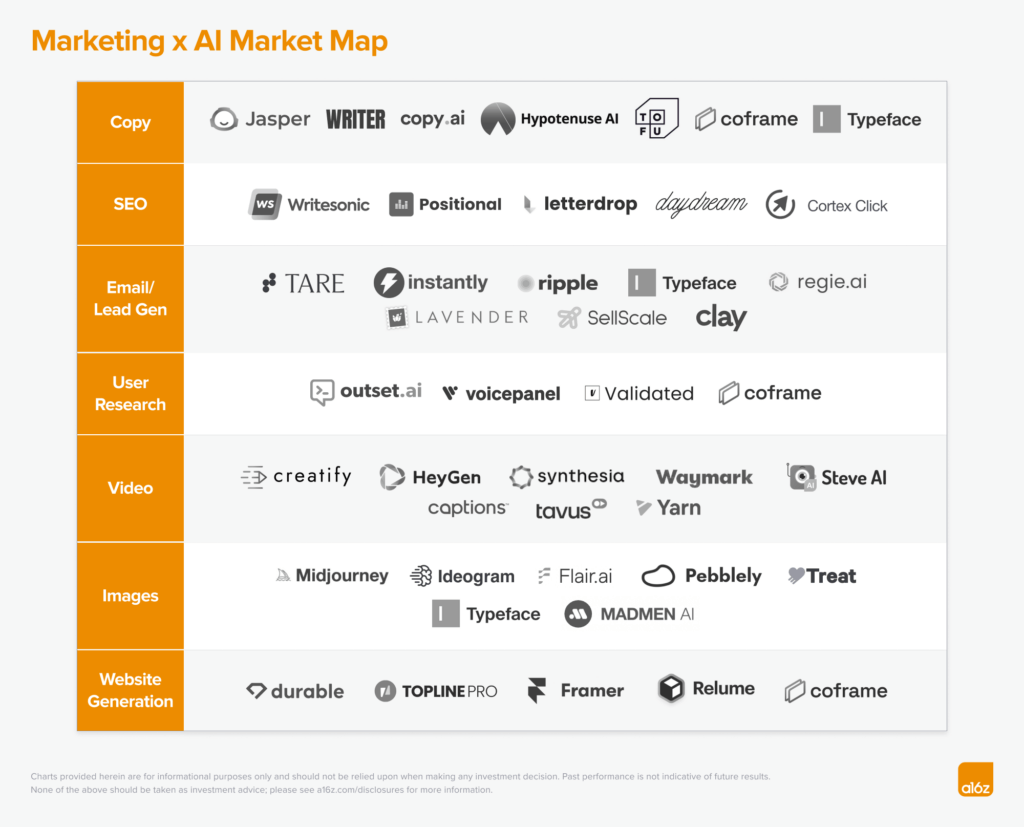
In order to make good decisions today, you sort of need to have an idea of where things are going. You don’t have to predict the future, but you need to have some assumptions about how it will evolve, otherwise you’re deciding only based on the past, and we all know the future doesn’t fit into the containers of the past.
As I think about the work world ahead, I’m trying to force myself to ask hard, sometimes existential questions without over-dramatizing stuff.
So, it’s logical to read a piece like this (via @cpaik and think: Will we even need software anymore after AI (and the agents, automation and algorithms) mature?
Of course we will need software. And, we’ll need software engineers. But, it’s clear the business models (the products themselves, the form factor, the way we pay and provision) will evolve pretty dramatically.
Will we need software companies? Will we care if the software comes from Adobe, Salesforce, or Mailchimp?
The cost to create “software” will drop dramatically, maybe to zero, as more and more functionality can be automated or created on demand via the centralized AI platforms. How many GPTs (i.e. software apps) were created immediately when ChatGPT opened up the doors? 3 million?
Maybe ChatGPT or Google will be the Spotify of apps, like the App Store has been for mobile apps, aggregating millions of niche, AI driven services we can plug into our day. We’ve seen this pattern before in the music industry. Music got easier and cheaper to create and distribute, and there has been an explosion of new music (and audio) for us to listen to. It’s hard to get paid for that music if you’re an artist, but it’s never been easier or cheaper to make it. Same for video. Or, writing. Or, “content”.
I’m betting on an explosion of “software” from prosumers, as the tools to make “apps” or agents or GPTS or whatever get into the hands of creative people who have problems to solve and opportunities to pursue. I want to believe that the rise of automated software will make us all pseudo engineers, just like Blogger and Wordpress turned a lot of us into“writers” and garageband or bandcamp let a lot of us get our music out into the world.