

Great news! You’ve got an interview with that awesome company! You’ve heard so much about their culture, the management training program and all the cool benefits.
Bad news: You knew AI was filtering resumes based on word-matches and you figured out how to get through. But now, at least at some companies, you get to have an “interview” with a “conversational HR agent” prove you have skills and hope their AI can interpret your answers. What could go wrong with that?
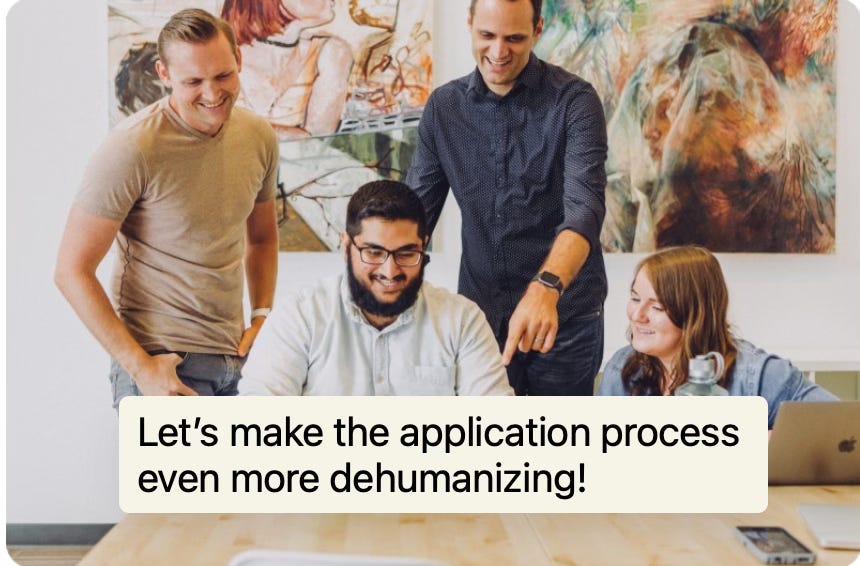
That’s right, job seekers are now being asked to have their first interviews with Synthetic screeners. Maki is the latest tool to get funded, but there are others. These tools seem to be starting with front-line roles, but they’re coming for all jobs. Maybe we can have our AI meeting assistants write up the notes for each other, too?
Job hunting has always sucked and it seems to be getting worse, especially for white collar roles, mid-career job switchers and middle management leadership jobs. I’ve seen it up close and personal over the last handful of covid-and-beyond years: The gutting of middle management, Ghost jobs, the black hole you send your resume into, slow response times and hiring committees that don’t seem to know what they really want. Even VP level candidates are getting ghosted by corporate recruiters now.
The “talent acquisition” industrial complex has devolved into a bit of a hellscape for all four sides of the market:
Employers - For a lot of roles, it’s a buyers market (employers being the buyers) but the talent gap is still real, especially for key roles like data, martech leadership, e-commerce and driving more efficient ops. They have regulatory and policy principles to respect, so they have to cast a wide net and make it free and easy to apply. They get a deluge of resumes they have to sort through and review. So it makes sense they see AI-driven tools as a way to alleviate the overhead.
Job Seekers - Job hunting is a volume game over time. Why not submit an application to just about any job where you might be a fit and hope someone gives your resume a look? And, with tech-driven tools and AI assists, it’s even easier than ever before to spray and pray.
Recruiters and Search Firms - The good news is that it’s never been easier to find candidates. But, the good ones are getting spammed with bogus offers and they are ignoring outreach. So, getting candidate engagement to stick is the hard part.
The tech companies serving the space - They’re locked into the history of the market, and are forced to integrate with legacy ATS systems that are built around single job specs, the resume-as-artifact and a heavy dependence on job aggregators like Indeed and LinkedIn.
Is anybody happy with this industry? Is it working well for anyone?
Employees seem disenchanted and detached and are seeking a move. But, the job search process is so hard that maybe more will stay, just to avoid the hassle of the job switch.
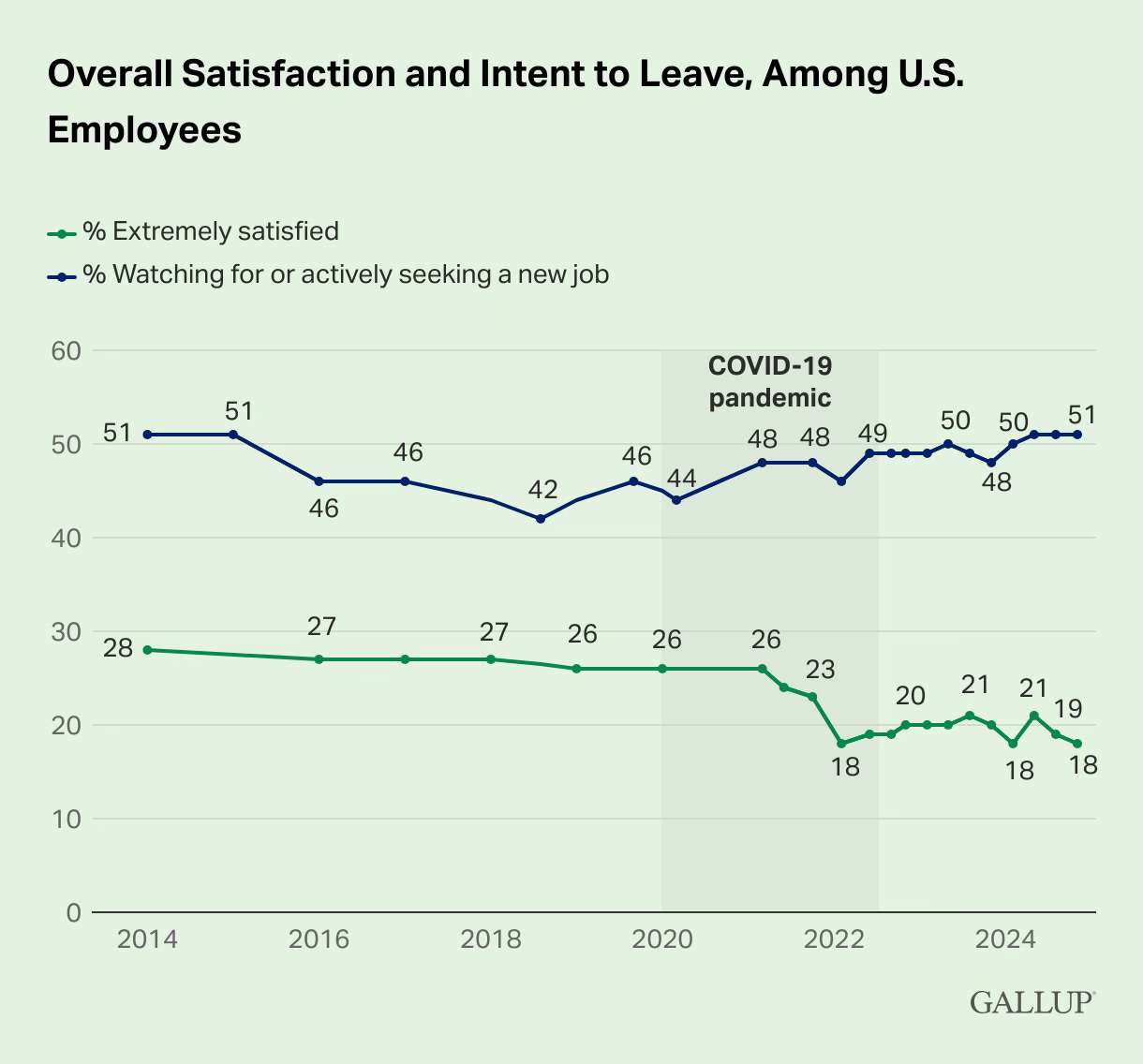
I do know my contacts on the corporate side seem happy with their ability to find and recruit great talent. Supply of talent isn’t the issue anymore. That could be because the market has shifted in the last two to three years, and the “buyers” (corporates) have the leverage right now.
I’m lucky enough to NOT be in a job search right now, but i’ve got good friends that have been on the sidelines for long stretches (in some cases a couple years) as they work through (or against) the system.
An Inefficient Market For High Demand Talent
It’s 2025 and we still have a highly inefficient market. Technology solutions are focused on either the buyer or the seller, but they’re not really focused on solving the problem.
Where’s the “Transfer portal” for corporate jobs? You know, that thing where you can privately, securely communicate that you’re open to moving jobs. Then, the right company can find you and make a connection. Obviously, there are employment law and corporate policies that would make this tricky, but there have to be ways to make it work. Some companies are working on this, but it’s still early.
And, as long as I’m griping… why are we still using resumes in 2025? Isn’t there a better way to communicate what we’ve done professionally, our successes, our career and role preferences, our development goals and our timeline for moving? I remember one of the first digital companies I worked with was, back in the early 2000’s, working on a next-gen resume product. Hasn’t this problem not been solved yet? (yes, there are plenty of tools to make a standard resume, but the resume itself - the form, the content - hasn’t seemed to evolve beyond what we see on Linkedin.)
I’m guessing that 80% or more of management/white collar jobs are still getting filled via networking, primarily because the tools aren’t better.
Rant over.
If you’re a job searcher, hang in there. I think 2025 will be a growth year and some of the hesitancy we’ve been seeing from corporations on hiring, investing and innovation will break down.
Meanwhile, be kind and generous to each other. A little bit of humanity goes a long way when folks are dealing with the white static of the AI mediated job search.
This did not do much to cure my existential dread about the algorithm, but is highly informative!
I had to do a "one-way video interview" as the first step for a job that I had a referral for recently. This job didn't even list a salary range, something I'd normally discuss in the first round with HR. It was so dehumanizing. My brother works in HR and I was kind of baffled that he likes these interivews. It doesn't seem like it's increase efficiency much for an employer, so I don't get it. It's a weird market.